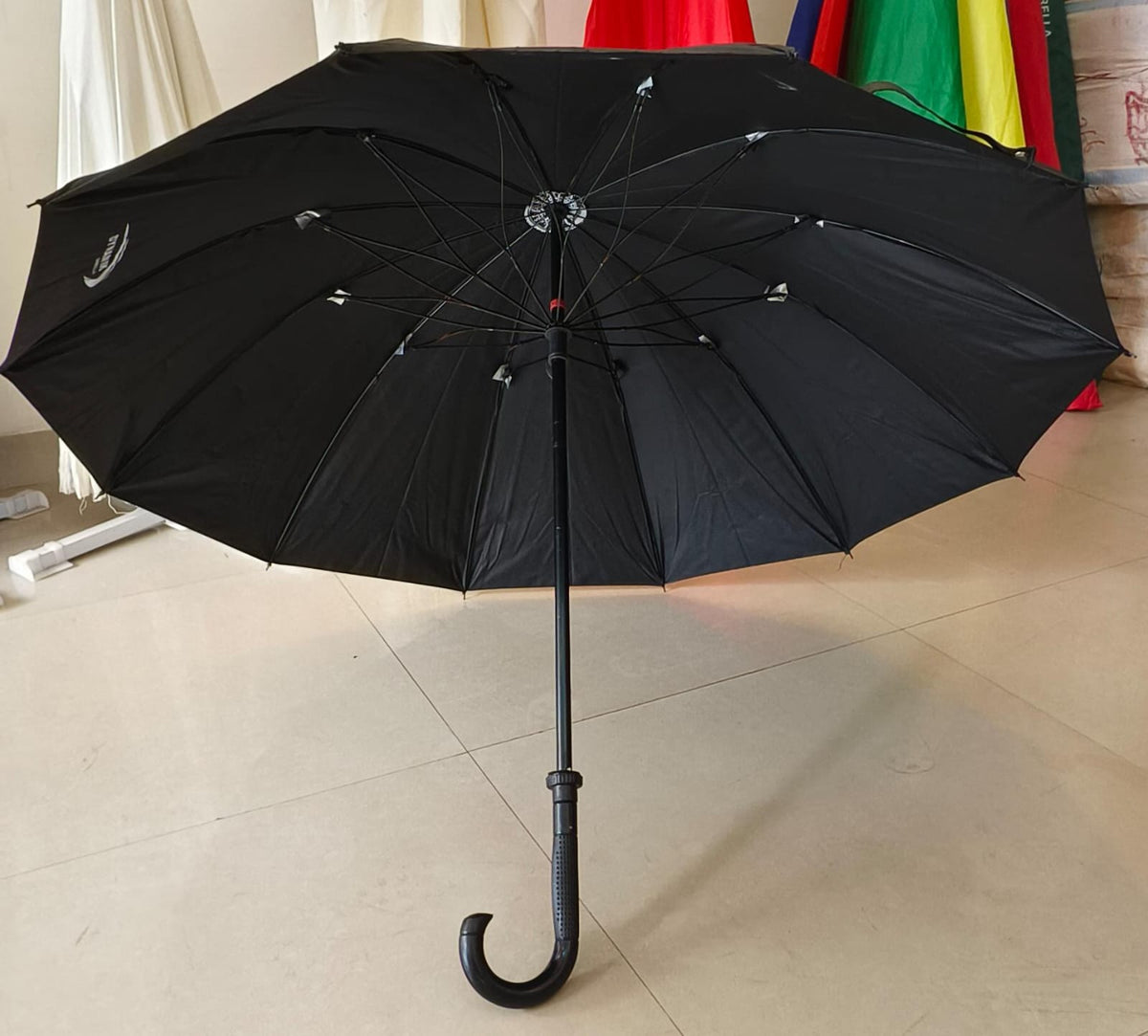
 Straight Umbrella
 Fancy Umbrella
Nobody invented the umbrella in one go. It grew out of the sunshade — the parasol — which people used in hot countries for thousands of years. The rain umbrella we carry today took shape much later, and the folding steel frame inside it is less than two hundred years old.
Parasols came long before rain umbrellas
Parasols were used for shade and status in several ancient civilisations, including Egypt, Mesopotamia, China and India, often carried over kings, priests and nobles. In India the royal parasol, or chhatra, became a symbol of rank, and you still see ceremonial umbrellas at temples and festivals.
China is often credited with making umbrellas that kept out rain, by coating paper or silk with oil or lacquer. The look survives today in oriental paper-style parasols, like our Japanese umbrella, which is now used mostly for décor and photo shoots.

How the rain umbrella reached Europe
Umbrellas were known in Europe by the 1600s and early 1700s, but in Britain they were seen as a woman's accessory. That changed with Jonas Hanway, a London traveller and writer who, from around 1750, carried an umbrella through the streets in the rain. He was mocked at first — especially by carriage drivers, who earned money on rainy days — but within a few decades carrying an umbrella became normal for men too. He is often called the man who made the umbrella popular in England, though he did not introduce it.
The steel frame changed everything
Early umbrellas were heavy. Their ribs were made of whalebone, cane or wood. In the 1840s and 1850s, English makers began using steel. Samuel Fox's "Paragon" frame, with light U-shaped steel ribs, is usually dated to 1852 and became the standard for good umbrellas for more than a century.
The same basic idea — thin metal or fibreglass ribs that open from a sliding runner — is inside almost every umbrella sold today, from a straight umbrella to a 5-fold capsule umbrella.
Why are umbrellas black?

Black umbrellas are common, and there is no single agreed reason. A few practical advantages help explain why people keep choosing them:
- It hides dirt. A black canopy does not show mud splashes and stains the way a light colour does.
- It suits everyone. Black goes with office clothes and formal wear, for men and women alike.
- It is the familiar choice. Many shops stock black first, and many customers ask for it.
In India, black umbrellas also do a second job in summer. Many have a silver coating on the underside, sold as black-silver umbrellas, and are carried for shade on hot days as well as for the monsoon.
Umbrellas today
The umbrella has come a long way from the royal parasol: automatic open-close buttons, windproof double canopies, clear plastic transparent umbrellas, umbrellas small enough for a pocket, and large garden umbrellas for shops and cafés. Classic Umbrella has been part of that story in India since 1990.
Want to understand what separates a good umbrella from a weak one? Read our 8-point umbrella checklist.